

Surgical gowns play an essential role in maintaining a sterile environment during medical procedures by protecting both healthcare workers and patients from harmful microorganisms, body fluids, and particulate matter. These gowns are designed with strict safety standards in mind to ensure they offer the necessary level of protection for various medical environments. Let’s explore the protective capabilities of surgical gowns and what makes them effective.
Key Protective Features of Surgical Gowns
Surgical gowns are specifically designed to offer protection in high-risk environments like operating rooms, where contamination control is crucial. They must meet stringent regulatory standards to provide adequate defense against potential hazards.
Critical Zones of Protection
Surgical gowns are designed with “critical zones” that require heightened protection. These zones include the front of the gown from the shoulders to the knees and the arms from the wrist cuff to above the elbow. These areas are where most exposure to blood, bodily fluids, and microorganisms occurs during a surgical procedure, so they must have a barrier performance of at least Level 1, as defined by the American Association of Textile Chemists and Colorists (AATCC). The back of the gown, however, may be non-protective or less protective because it generally does not come into direct contact with contaminants in the surgical field.
Material Used in Surgical Gowns
The level of protection a surgical gown provides depends heavily on the material used to manufacture it. Surgical gowns can be made from several types of fabrics, each offering different degrees of protection:
- Impermeable Materials: Some gowns are made from impermeable materials such as plastic films or laminated fabrics. These gowns provide a liquid-proof barrier, preventing any fluids or microorganisms from penetrating the material.
- Water-Resistant Fabrics: Many surgical gowns are constructed using tightly woven fabrics that are water-resistant but not fully impermeable. These gowns offer a certain degree of protection against body fluids but may not fully block all contaminants, particularly under high-pressure conditions.
- Reinforced Fabrics: Some surgical gowns are reinforced with films, membranes, or coatings to make them more resistant to liquid penetration. These gowns are generally considered liquid-proof, offering a higher level of protection during surgical procedures that may involve exposure to large volumes of bodily fluids.
Related: How to Wear a Surgical Gown
Protection Levels: Classifications of Surgical Gowns
Surgical gowns are classified into different levels based on their barrier performance during specific tests. These classifications are used to match gowns with the risk level of the medical environment. The most common tests used to determine the protective performance of a surgical gown include the AATCC 42 Impact Penetration Test and the AATCC 127 Hydrostatic Pressure Test.
Here’s how surgical gowns are typically classified:
- Level 1: This is the lowest protection level and is used for minimal risk environments, such as standard patient care procedures. These gowns offer protection against light fluid exposure but may not be suitable for high-risk scenarios.
- Level 2: Designed for low-to-moderate risk situations, such as blood draws or minor surgical procedures. These gowns offer better protection against bodily fluids and microorganisms.
- Level 3: Used in higher-risk procedures such as arterial blood draws or orthopedic surgeries. Gowns in this category provide enhanced barrier protection against fluids and microorganisms.
- Level 4: The highest level of protection, used in high-risk environments like open-heart surgeries or when dealing with infectious diseases. These gowns offer complete liquid and microorganism protection, preventing any form of contamination.
Risk Level and Environment
The protection level of a surgical gown depends on the anticipated exposure and the risk level of the environment. In less critical environments, such as standard examinations or outpatient procedures, a Level 1 or Level 2 gown may suffice. However, in more invasive procedures such as surgeries or dealing with highly infectious patients, a Level 3 or Level 4 gown may be necessary to prevent any risk of contamination.
How Protective Are Surgical Gowns in Practice?
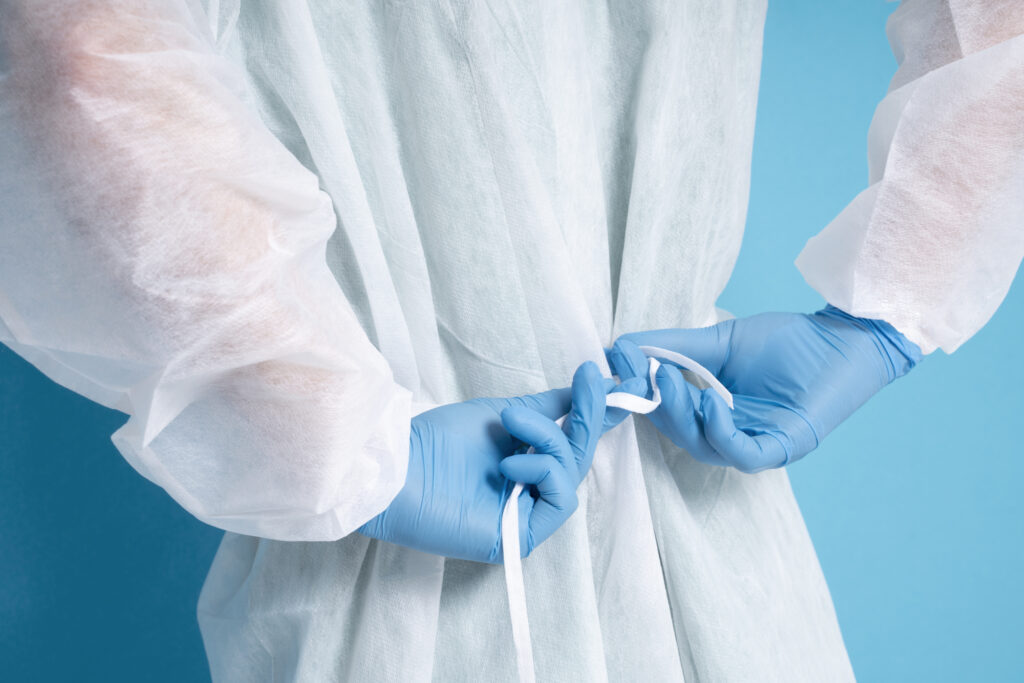
The protective capability of a surgical gown depends not only on its material and classification but also on how it’s used in practice. A gown that fits properly and is worn correctly (with a secure tie, full coverage of critical zones, and no rips or tears) will offer the best protection. Any gown that becomes contaminated or damaged during a procedure should be replaced immediately to maintain its protective effectiveness.
Conclusion
Surgical gowns are designed to provide vital protection in medical settings by preventing the transfer of harmful microorganisms, fluids, and particulate matter. The effectiveness of these gowns depends on several factors, including the critical zones of protection, the material used, the gown’s level classification, and the risk level of the environment. By adhering to appropriate guidelines and using the right gowns for the right procedures, healthcare professionals can significantly reduce the risk of cross-contamination and ensure the safety of both patients and medical staff.