

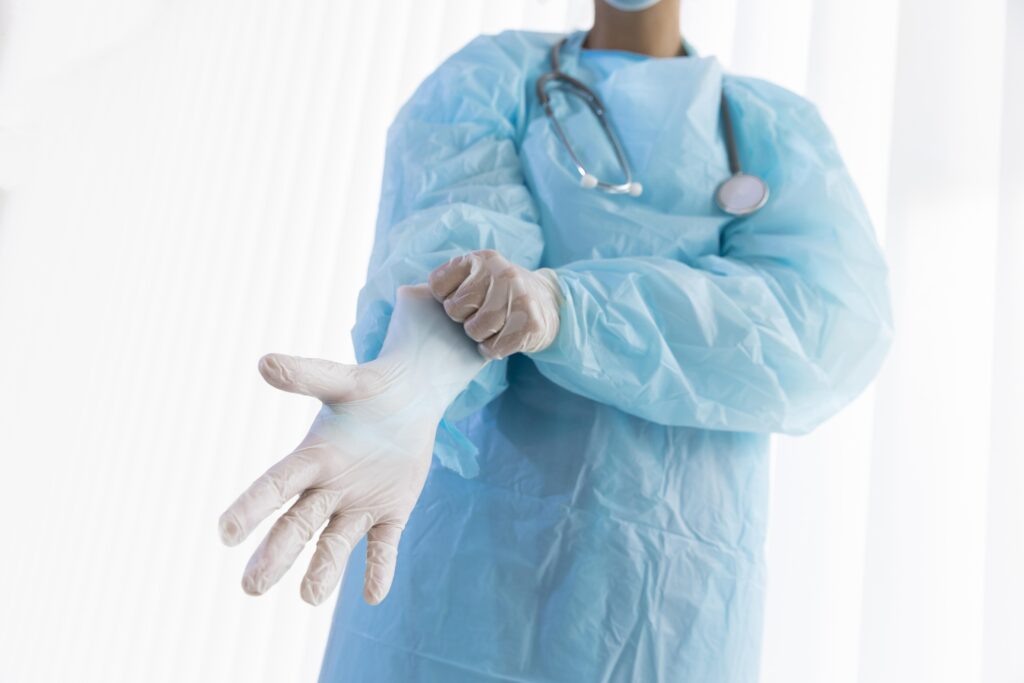
Medical gowns, including surgical gowns, are crucial protective garments designed to shield healthcare workers and patients from the transmission of harmful microorganisms, bodily fluids, and contaminants. The process of making these gowns involves multiple steps, from the selection of raw materials to sterilization methods. Below, we delve into the manufacturing process of medical gowns, the different types, and the key factors that contribute to their protective and functional properties.
1. Raw Materials: The Foundation of Medical Gowns
The production of medical gowns begins with selecting appropriate raw materials. These materials are carefully chosen to ensure that the gowns provide a high level of protection while being comfortable to wear and cost-effective.
- Polyester: The most commonly used fiber in medical gown production is polyester, due to its availability, durability, comfort, and excellent barrier properties. Polyester is often blended with other fibers like cotton to improve the gown’s overall performance.
- Cotton/Polyester Blends: Traditional fabrics like cotton, when woven tightly and blended with polyester, offer better protection against microorganisms. These fabrics are often treated with liquid-repellent fluorocarbons to enhance their barrier properties.
- Microfilament Fabrics: These are fine, tightly woven fabrics made from microfilaments. These fabrics are hydrophobic, making them resistant to liquid penetration, which is essential for surgical gowns used in high-risk procedures.
- Multilayer Fabrics: These fabrics are composed of multiple layers that serve different purposes. For example, the outer layer may resist abrasion and puncture, while the middle layer provides liquid resistance and the bottom layer ensures comfort for the wearer.
2. Types of Medical Gowns
Medical gowns can be categorized based on their intended use, with two primary types being disposable and reusable gowns. Each type has specific characteristics and advantages.
- Disposable Gowns: Made using nonwoven fabrics, these gowns are intended for single-use. They are sterilized before use, ensuring optimal barrier protection against microorganisms and bodily fluids. While they are more hygienic and effective for one-time use, disposable gowns contribute to environmental waste and can be costly over time.
- Reusable Gowns: Made from woven fabrics, these gowns are designed to be used multiple times. They are cost-effective in the long run and produce less clinical waste. However, their barrier properties can degrade with repeated washing and reprocessing, which may make them less effective over time.
3. Weaving and Fabric Construction
The type of weave used in medical gown fabric plays a significant role in the garment’s barrier properties. Common weaving structures include:
- Plain Weave: A basic weave that offers better barrier protection compared to other types, as it has fewer gaps between the fibers, making it harder for microorganisms to pass through.
- Twill Weave: While twill weave is durable, it has larger pores between the cross points, which may compromise its ability to resist microbial penetration. As a result, plain weave fabrics are now preferred for medical gowns.
4. Sterilization Methods for Medical Gowns
Sterilization is a crucial step in the manufacturing process of medical gowns, ensuring they are free from pathogens before being used in a healthcare setting. There are several methods used to sterilize these garments:
- Gas Sterilization (Ethylene Oxide): This low-temperature sterilization method is commonly used for disposable gowns. Ethylene oxide (EO) gas kills microorganisms by disrupting their cellular functions. However, it requires long cycles and produces toxic by-products, making it less suitable for all types of fabrics.
- Steam Autoclave: A high-temperature sterilization method widely used for reusable gowns. The process involves exposing the gowns to pressurized steam to kill any microorganisms. This method is effective, safe, and cost-efficient, but it can damage heat-sensitive fabrics.
- Steris System: This method uses low-temperature sterilization with a rapid cycle time (around 30 minutes). It is eco-friendly and effective for sterilizing medical equipment, but it is typically used for small batches of gowns.
- Sterrad System: Using hydrogen peroxide and low-temperature gas plasma, this method sterilizes medical gowns at temperatures between 45°C and 50°C. The sterilization process takes 45 to 70 minutes and is effective against a wide range of pathogens.
Related: How to Sterilize Disposable Gowns
5. Key Considerations in Medical Gown Production
In addition to the materials and sterilization methods, several other factors are considered during the production of medical gowns:
- Comfort: Medical gowns must be comfortable for healthcare workers to wear for extended periods. This is achieved by using breathable fabrics and ensuring proper fit.
- Barrier Protection: The primary function of medical gowns is to protect against the transmission of microorganisms and fluids. Therefore, manufacturers must ensure that the gowns meet strict standards for barrier protection, such as liquid resistance and microbial penetration.
- Cost: The cost of manufacturing medical gowns is an important consideration for healthcare facilities. While reusable gowns may offer cost savings over time, disposable gowns provide greater protection and convenience in high-risk procedures.
Conclusion
The process of making medical gowns is a combination of selecting the right raw materials, choosing appropriate manufacturing techniques, and applying effective sterilization methods. Surgical gowns, whether disposable or reusable, must meet stringent standards to provide adequate protection against harmful microorganisms. The careful balance of comfort, cost, and protection is crucial in ensuring that medical professionals and patients are kept safe in a healthcare environment. By continually improving the materials and methods used in gown production, manufacturers aim to enhance the safety and effectiveness of these essential medical garments.