
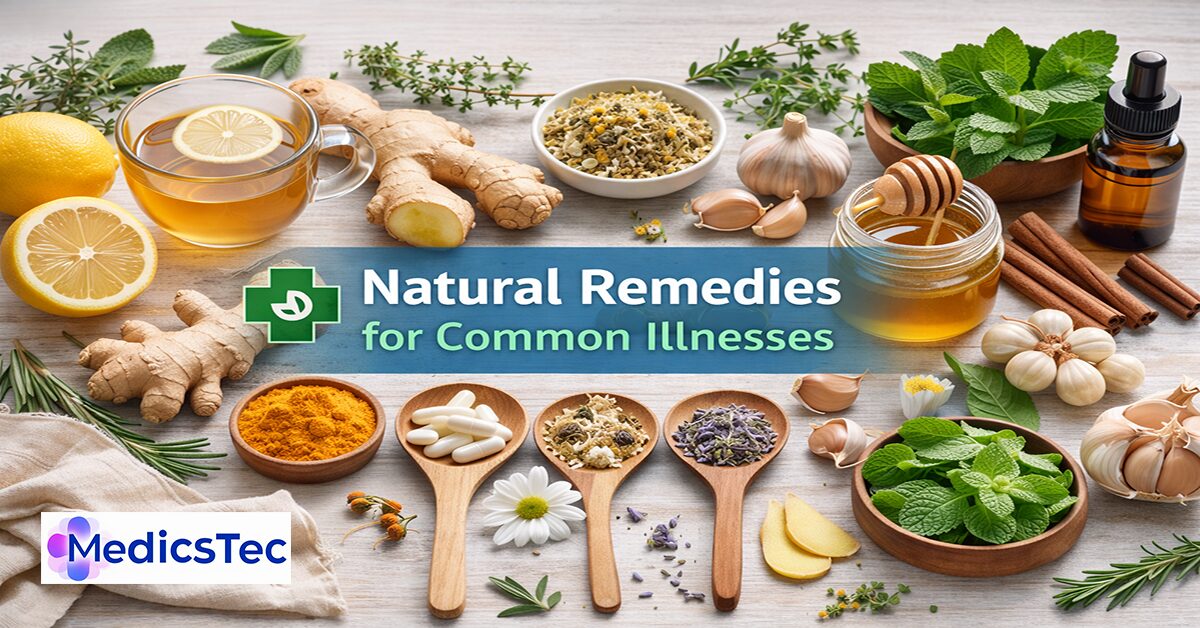
Natural Remedies for Common Illnesses
Natural remedies for common illnesses have been used for centuries—and today, many are supported by modern research. When used safely and appropriately, they can help relieve mild symptoms, support recovery, and complement healthy habits. This guide explains evidence-informed natural remedies, what the science says, and clear safety boundaries so you know when professional care is needed.
Important: Natural remedies are not a substitute for medical diagnosis or treatment. Always consult a healthcare professional for persistent, severe, or worsening symptoms.
What Are Natural Remedies?
Natural remedies include foods, herbs, lifestyle practices, and non-pharmaceutical approaches used to ease symptoms or support wellness. Research quality varies—some remedies have solid evidence, others limited or mixed results.
Trusted references for evaluating evidence include National Institutes of Health, Centers for Disease Control and Prevention, World Health Organization, and MedlinePlus.
Evidence-Informed Natural Remedies by Condition
🤧 Common Cold & Mild Flu-Like Symptoms
What may help
- Honey (ages 1+): Soothes cough and throat irritation.
- Ginger: Anti-inflammatory compounds may ease sore throat and nausea.
- Warm fluids (soups, teas): Support hydration and comfort.
What to avoid
- Giving honey to infants under 1 year (botulism risk).
When to see a doctor
- Fever > 102°F (39°C), shortness of breath, chest pain, or symptoms lasting > 10 days.
🤕 Headaches & Tension
What may help
- Magnesium: Some evidence for tension headaches and migraine prevention.
- Peppermint oil (topical): May reduce tension when applied to temples.
- Hydration & sleep: Common headache triggers.
When to see a doctor
- Sudden “worst headache of your life,” neurological symptoms, or headaches after head injury.
🤢 Digestive Upset (Bloating, Nausea)
What may help
- Ginger tea: Helpful for nausea.
- Peppermint: Can reduce gas and cramping in some people.
- Probiotics: May support gut balance over time.
Use with caution
- Peppermint can worsen GERD in some individuals.
😖 Mild Muscle & Joint Discomfort
What may help
- Turmeric (curcumin): Anti-inflammatory effects; absorption improves with black pepper.
- Epsom salt baths: Relaxation and temporary relief for sore muscles.
- Gentle movement: Stretching and low-impact exercise.
When to see a doctor
- Swelling, redness, warmth, or pain after injury that doesn’t improve.
😰 Stress & Sleep Support
What may help
- Chamomile: Mild calming effects for sleep.
- Lavender: Aromatherapy may reduce stress.
- Sleep hygiene: Consistent schedule, dark/cool room, limit screens.
Avoid
- Mixing sedating herbs with alcohol or sleep medications without medical advice.
Safety First: What Natural Remedies Cannot Do
- They do not cure infections, chronic diseases, or replace prescriptions.
- “Natural” does not mean risk-free—herbs can interact with medications.
- Supplements are less regulated; quality and dosage vary.
Always check reputable sources like MedlinePlus for interactions and dosing guidance.
How to Use Natural Remedies Responsibly
- Start low, go slow (especially with supplements).
- Use reputable brands with third-party testing.
- Track symptoms and stop if side effects occur.
- Tell your clinician what you’re using—especially if pregnant, nursing, or managing a condition.
FAQs: Natural Remedies for Common Illnesses
Are natural remedies safe?
Many are safe for short-term use when used correctly, but safety depends on the remedy, dose, and your health status. Always verify interactions.
Do natural remedies work as well as medicine?
They may help mild symptoms, but they are not equivalent to medical treatments for infections, chronic illness, or emergencies.
Can I use natural remedies with prescription drugs?
Sometimes—but interactions are possible (e.g., St. John’s wort). Check authoritative sources or ask a healthcare professional.
How long should I try a natural remedy?
If there’s no improvement within a few days (or symptoms worsen), stop and seek medical advice.
Are supplements better than food-based remedies?
Not always. Whole foods often provide gentler, safer benefits; supplements should be targeted and evidence-based.
When to Seek Medical Care Immediately
- Trouble breathing, chest pain, confusion
- High or persistent fever
- Severe pain, dehydration, or bleeding
- Symptoms in infants, elderly adults, or immunocompromised individuals
Key Takeaway
Natural remedies can be useful for mild, everyday symptoms when chosen wisely and used safely. Pair them with healthy habits—and rely on medical care when symptoms are serious or persistent. For evidence checks and updates, consult trusted public-health sources such as Centers for Disease Control and Prevention and National Institutes of Health.