
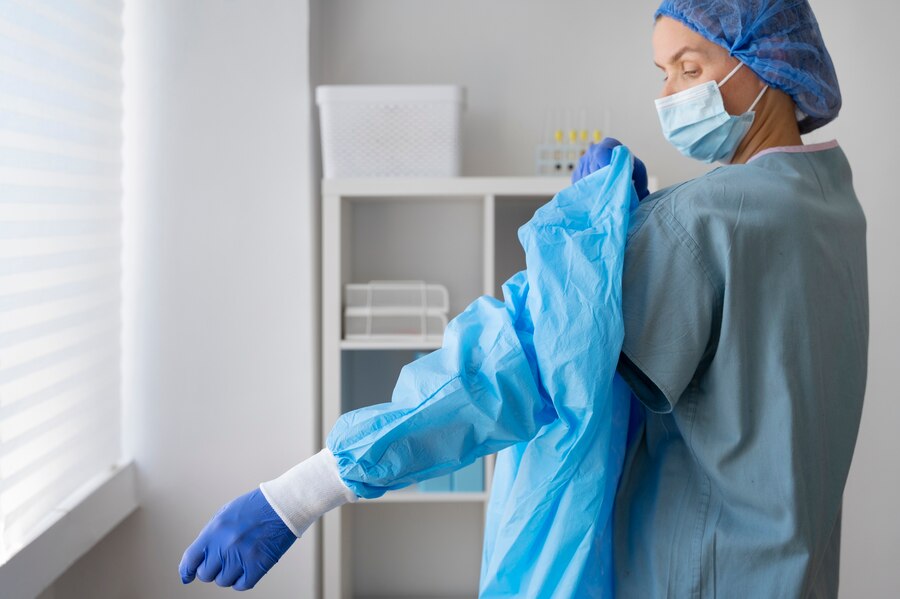
Personal protective equipment (PPE) plays a vital role in safeguarding healthcare workers, patients, and visitors from harmful infectious agents. Among the essential components of PPE, isolation gowns are key to preventing the spread of contaminants, especially when dealing with bodily fluids or potentially infectious materials. Whether you’re working in a healthcare setting or caring for someone at home, wearing an isolation gown properly ensures the highest level of protection for both you and those around you.
In this comprehensive guide, we’ll walk you through How to Wear an Isolation Gown, step by step, so you can maintain safety and hygiene in every situation. Let’s dive into the essential precautions and techniques for putting on this critical piece of protective gear.
Table of Contents
Why Is It Important to Wear an Isolation Gown the Proper Way?
Before we explore the step-by-step process of wearing an isolation gown, it’s important to understand why doing so correctly is so crucial. Isolation gowns are a cornerstone of infection control in healthcare settings, laboratories, and various industries where contamination is a concern. Properly donning this protective gear significantly reduces the risk of exposure to harmful pathogens, ensuring the safety of both medical professionals and patients.
Related: How to Wash Reusable Isolation Gowns
Wearing an isolation gown the right way can:
Prevent Cross-Contamination: Isolation gowns are designed to shield your body and clothing from bodily fluids, blood, and other contaminants. Incorrectly wearing the gown can leave gaps in coverage, increasing the risk of coming into contact with dangerous pathogens.
Maintain Sterility: In environments like hospitals and labs, maintaining sterility is paramount. A properly worn gown ensures that the integrity of sterile fields is preserved, especially during procedures or when handling infectious materials.
Ensure Safety for Both Patients and Healthcare Workers: Isolation gowns provide a barrier not only for the wearer but also for patients and others in the environment. Wearing it correctly protects both the healthcare worker and those they care for from potential exposure to harmful microorganisms.
Promote Infection Control Compliance: Hospitals and healthcare facilities are bound by strict infection control protocols. Properly wearing an isolation gown is part of following these guidelines, which help reduce the spread of infections and promote public health.
By ensuring you put on your isolation gown correctly, you are taking an essential step in creating a safer environment for both healthcare professionals and patients alike.

10 Step Guide to Wearing an Isolation Gown
Wearing an isolation gown properly is essential for maintaining safety and preventing contamination. Follow these steps to ensure you’re fully protected and your gown is worn correctly:
Choose the Right Gown
Start by selecting the appropriate isolation gown for your task. Gowns come in different types and protection levels (e.g., fluid-resistant, fluid-proof, and antimicrobial). Choose one that meets the specific requirements of your environment or task, such as a higher level of protection for surgeries or high-risk procedures.
Wash Your Hands
Thoroughly wash your hands with soap and water for at least 20 seconds before touching any PPE. Hand hygiene is vital to prevent transferring germs or contaminants to the gown and other surfaces.
Wear Additional PPE (If Needed)
Depending on the situation, you may need additional personal protective equipment (PPE) such as gloves, masks, or eye protection. Make sure to put these items on first before donning the isolation gown to avoid contaminating them during the process.
Identify the Front and Back of the Gown
Unfold the isolation gown carefully and identify the front and back. Most gowns will have a label or tag to indicate the front side. Hold the gown by the shoulders, ensuring the inside of the gown is facing you.
Slip Your Arms Through the Sleeves
Gently slip your arms through the gown’s sleeves. Be sure the sleeves cover your wrists and extend past your wrists when your arms are fully extended. This ensures complete coverage and minimizes the risk of exposure.
Fasten the Neck Closure
Secure the gown at the neck area. Depending on the design of the gown, you may need to tie, snap, or use hook-and-loop closures. Make sure the neck is fastened tightly enough to prevent any gaps but still allows for comfortable movement.
Secure the Waist
Next, fasten the gown at the waist. This can be done by tying the strings or using any provided fastening mechanism at the back. Ensure that the gown fits snugly at the waist to provide full coverage of your lower torso.
Adjust for Comfort and Fit
Adjust the gown to ensure it is comfortable and allows for full range of motion. It should be snug enough to avoid shifting but not too tight. Ensure the gown fits properly to protect your body while allowing you to move freely.
Inspect for Proper Coverage
Check that the gown fully covers your torso, arms, and reaches at least to your knees. The gown should not have any openings or gaps that could allow contaminants to come into contact with your skin.
Perform a Final Check
Before proceeding with any tasks, perform a final inspection to ensure all PPE is properly secured and that you are fully protected. Double-check that the gown is fastened at both the neck and waist, and that no skin is exposed.
Conclusion
Wearing an isolation gown correctly is essential for maintaining both personal and patient safety in healthcare environments. By following the steps outlined in this guide, you ensure that you are fully protected from contaminants and help prevent the spread of infections. Remember, the right gown, proper hand hygiene, and securing your PPE correctly are all integral components of infection control. Whether you’re working in a hospital, laboratory, or any other setting where protection is key, wearing an isolation gown properly is a simple but effective way to safeguard your health and the well-being of others.
Stay vigilant and ensure that you are always properly equipped to prevent contamination and protect yourself in any environment.
Frequently Asked Questions (FAQs)
Do I need to wear an isolation gown every time I enter a patient’s room?
It depends on the level of isolation required. For high-risk patients, such as those with infectious diseases, wearing an isolation gown is essential. For other patients, gowns may be required based on the facility’s infection control protocols. Always follow the guidelines provided by your healthcare facility.
Can I reuse an isolation gown?
Isolation gowns are typically single-use items. Reusing a gown can compromise its integrity and increase the risk of cross-contamination. Always discard the gown properly after use and don a new one when necessary.
What type of isolation gown should I choose?
The type of gown you need depends on the level of protection required. For example, fluid-resistant or fluid-proof gowns are ideal for situations where exposure to bodily fluids is likely. Consult your facility’s infection control team to ensure you choose the correct gown for your specific needs.